Quarterly Market Update - January 2026
Concentration, Not Crisis: A Quiet Yet Powerful Market Shift
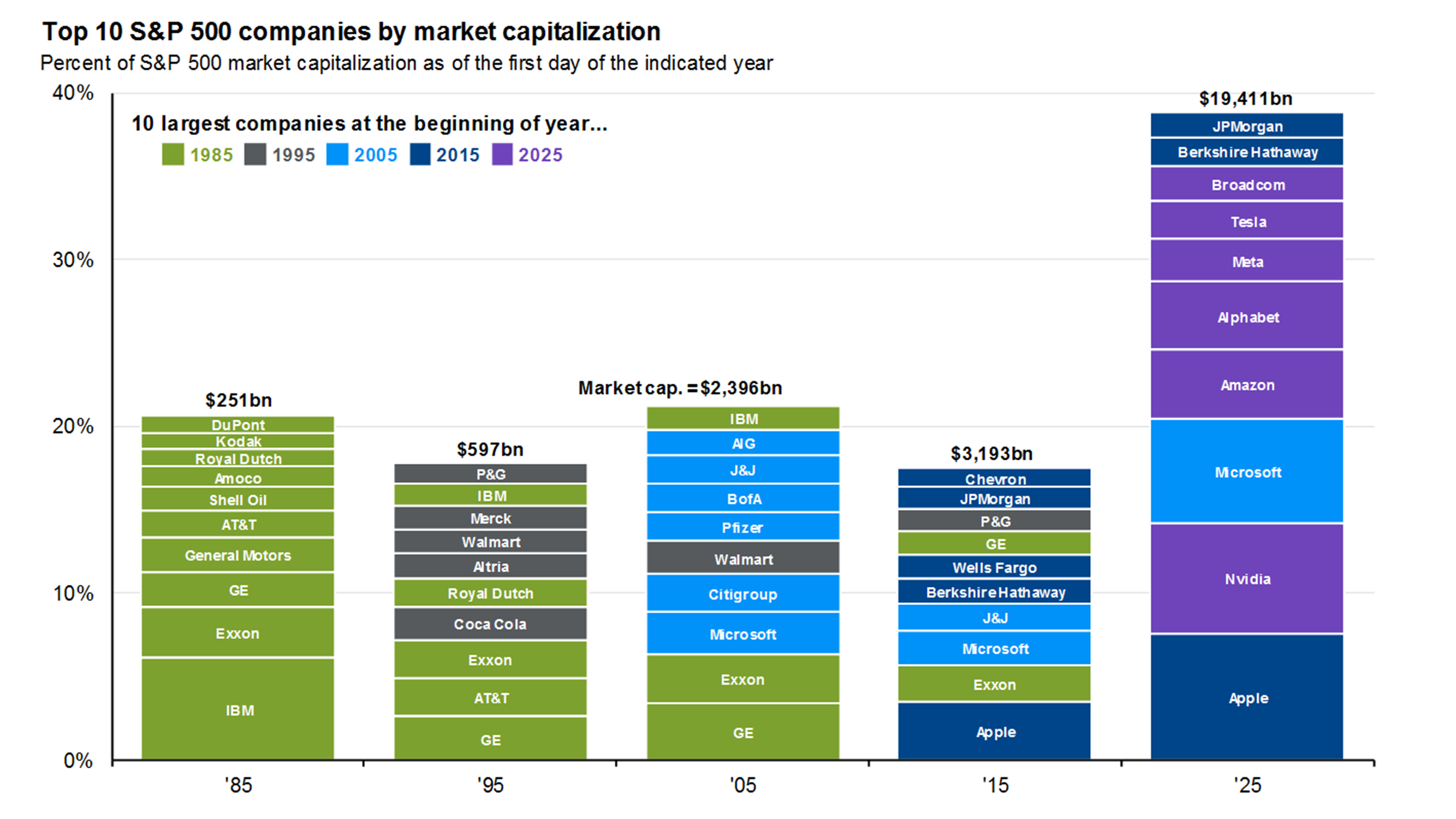
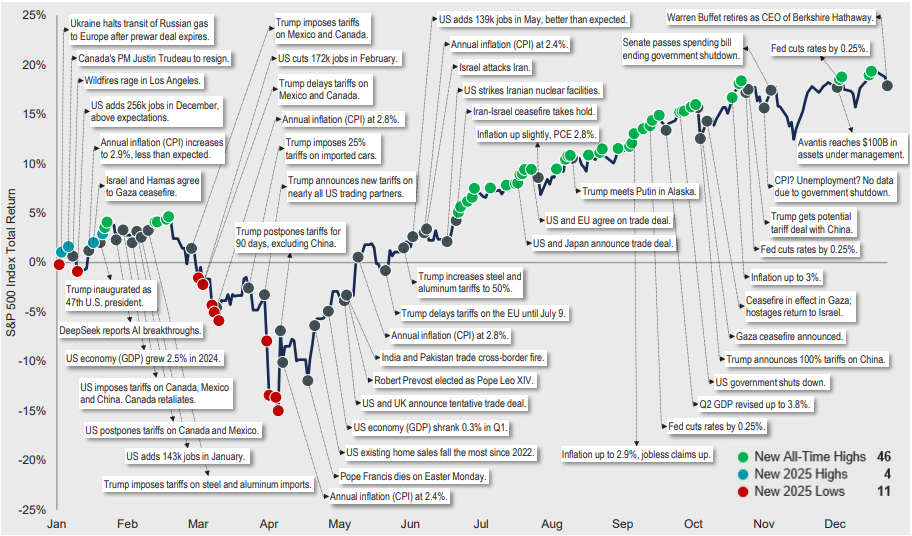
Over the past year, market headlines have been dominated by strong returns and record highs. But beneath the surface, something more nuanced has been happening: a historically small group of companies has been responsible for a disproportionately large share of market gains.
This isn’t a sign that markets are broken or that a downturn is imminent, but it is a shift worth understanding, because periods of concentration tend to shape how markets behave, how portfolios feel, and how investors are tempted to respond.
A Narrow Group Driving Broad Indexes
Market leadership naturally ebbs and flows over time. What’s notable today is just how narrow that leadership has become. A handful of large, innovative companies, many tied to long-term themes like artificial intelligence, have driven much of the recent performance in major indexes.
As a result, indexes can rise even while many individual stocks, sectors, or regions lag. For diversified investors, this can create a disconnect between what headlines suggest and how portfolios actually feel. That disconnect can be uncomfortable but it’s not unusual during transitional market periods.
Why This Feels Hard as an Investor
Concentrated markets have a way of testing discipline. When a small group of companies captures most of the upside, diversification can temporarily feel unnecessary, or even frustrating. It can raise natural questions: Am I missing out? Should I be doing something different?
These feelings aren’t a sign of poor decision-making. They’re a normal response to markets rewarding a narrow outcome. Historically, some of the most challenging moments for long-term investors occur not during sharp downturns, but during periods when returns appear easy - just unevenly distributed
What History Suggests
Market leadership does not last forever. While innovation and strong fundamentals matter, periods of extreme concentration tend to evolve as expectations shift, growth broadens, or leadership changes. That process rarely happens on a predictable timeline and is often accompanied by volatility along the way.
The Magnificent Seven is a great example of the benefit of diversification within portfolios – as we closed 2025, only two of the seven companies in the Magnificent Seven had outperformed the broader S&P index. While they have carried much of the index’s returns (and market returns, for that matter) for the past few years, only having exposure to a select few names would have led to underperformance in 2025. Since past performance is not an indicator of future returns, it is impossible to say where the Magnificent Seven will go in 2026, though we do continue to believe that broad diversification is the best way to protect portfolios over the long run.
The key takeaway isn’t that today’s leaders will suddenly falter, but that markets are dynamic, and narrow outcomes rarely define entire cycles.
What This Means for Portfolios
Diversification isn’t designed to outperform in every market environment. Its purpose is to manage risk across different outcomes, especially when leadership is concentrated and expectations are high. Staying diversified means accepting that portfolios won’t always mirror the most popular corners of the market. But it also means avoiding overexposure to a small group of companies or themes at moments when the cost of getting it wrong can rise quickly.
Our focus remains on building portfolios that can participate in long-term growth while maintaining balance across regions, sectors, and styles so they’re positioned to adapt as markets evolve.
Staying the Course
Markets don’t require constant action. They do, however, reward patience, perspective, and a disciplined approach, particularly during periods when a narrow set of winners dominates the narrative. We have seen multiple instances in recent years where individual stocks experienced double-digit declines in a single day, while the broader index finished higher. This highlights the difference between index performance and the experience of owning individual companies.
Today’s environment isn’t about crisis or complacency. It’s about understanding what’s driving returns, recognizing the risks that come with concentration, and staying committed to a long-term plan built to weather a wide range of market conditions.